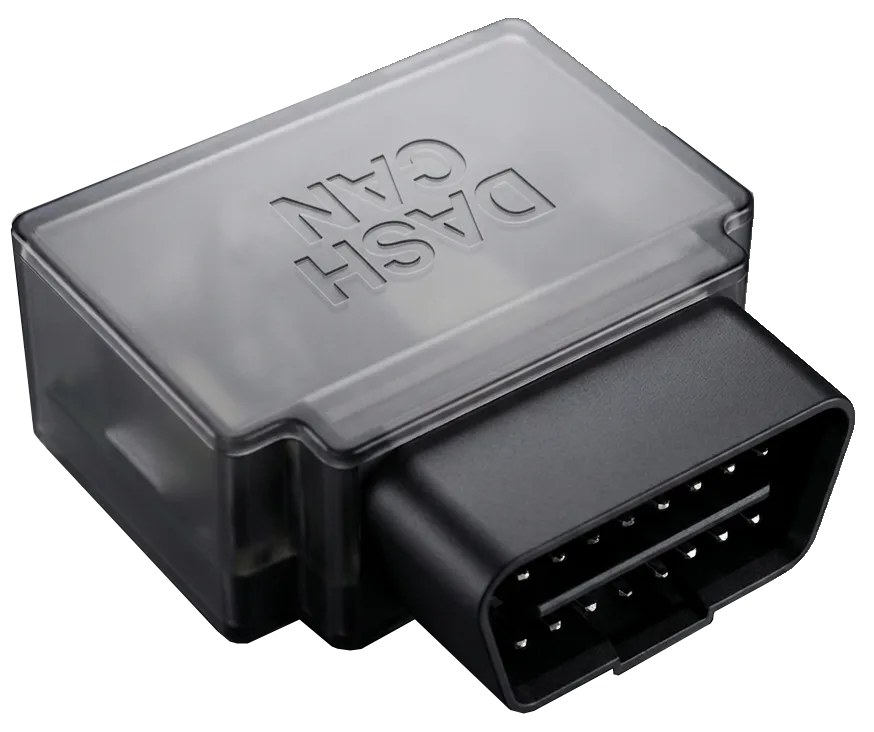
DashCAN OBD Interface
Plug into the OBD port and your ECU is on your phone
DashCAN OBD plugs into the OBD port and streams every channel your standalone ECU broadcasts: up to 20 live gauges at 50 updates a second, full data logging, and CAN switches that control the car.
€79.90Out of stock
Hard-wiring a race loom? DashCAN Wire-In is the same interface with a 4-pin screw terminal.
- Live updates
- 50/s
- Live channels
- 20
- CAN access
- Read + write
- Wireless
- Bluetooth 5 LE
High-speed CAN with switchable 120 Ω termination, OBD connector, data logging with XLSX export. iOS and Android.
Your phone becomes the dash
Every screen below is live CAN data in the free DashCAN app. Build your own layout, pick gauge styles and colors, then log everything you see.
Is DashCAN OBD right for your car?
It plugs into the OBD port, but it is not a diagnostic scanner. It reads the CAN stream a standalone ECU broadcasts. Thirty seconds of honesty so you buy the right thing:
A great fit if
- Your car runs a standalone ECU (like Ignitron) that broadcasts data as custom CAN messages
- The OBD port's CAN pins are wired to the bus your ECU transmits on
- You want plug-and-play: no loom changes, and it moves between cars in seconds
- You want to log sessions and fire CAN switches without a laptop in the car
Not for you (yet) if
- Your car is stock: factory-ECU OBD-II diagnostics (PID polling) is not supported yet
- You expect fault-code scanning like a workshop diagnostic tool, which is not what DashCAN is for
Not an ELM327 dongle, even if it uses the same port
A generic dongle asks the car polite diagnostic questions. DashCAN reads the raw stream your ECU is already sending, and can talk back.
Generic ELM327 dongle
- Polls a handful of OBD-II diagnostic PIDs, a few times a second
- Factory-defined parameters only
- Read-only, cannot switch anything
- Standalone ECUs usually do not answer OBD-II requests at all
DashCAN OBD
- Listens to raw CAN frames at full bus speed
- Any channel your ECU broadcasts: 20 at once, 50 updates a second
- Writes too: CAN switches trigger real functions in the car
- Built for standalone ECUs from day one
Setup in four steps
The full guide with pictures and the per-ECU settings is on the First Steps page.
1
Connect it to the car
Plug it into the OBD port. The port's CAN pins have to be on the bus your ECU broadcasts on.
2
Enable the CAN broadcast in your tuning software
Each ECU has a short guide with the exact settings and pins. Ignitron users import two ready-made files.
3
Install the free app and pair over Bluetooth
iOS or Android. Grant the permissions the app asks for, then pair the interface.
4
Pick your ECU in the app
The channels show up live. Build your layout, then drive.
Works with
Ignitron ECU, ECU Master EMU, ECU Master EMU PRO, Emtron (needs the Apex), Haltech (needs the Apex), Hondata, MaxxECU, MegaSquirt, MoTeC (needs the Apex), rusEFI, Speeduino, Syvecs (needs the Apex), VEMS (needs the Apex), and any other ECU that can broadcast custom CAN messages.
This interface runs at a fixed 500 kbit/s. Emtron, Haltech, MoTeC, Syvecs and VEMS broadcast at 1 Mbit/s, which only the DashCAN Apex can read.
Which DashCAN is right for you?
Same app, same live data. Pick by how you connect, and whether you want lap timing built in.
- You have an OBD portDashCAN OBDThis pagePlug in and drive. Moves between cars in seconds.
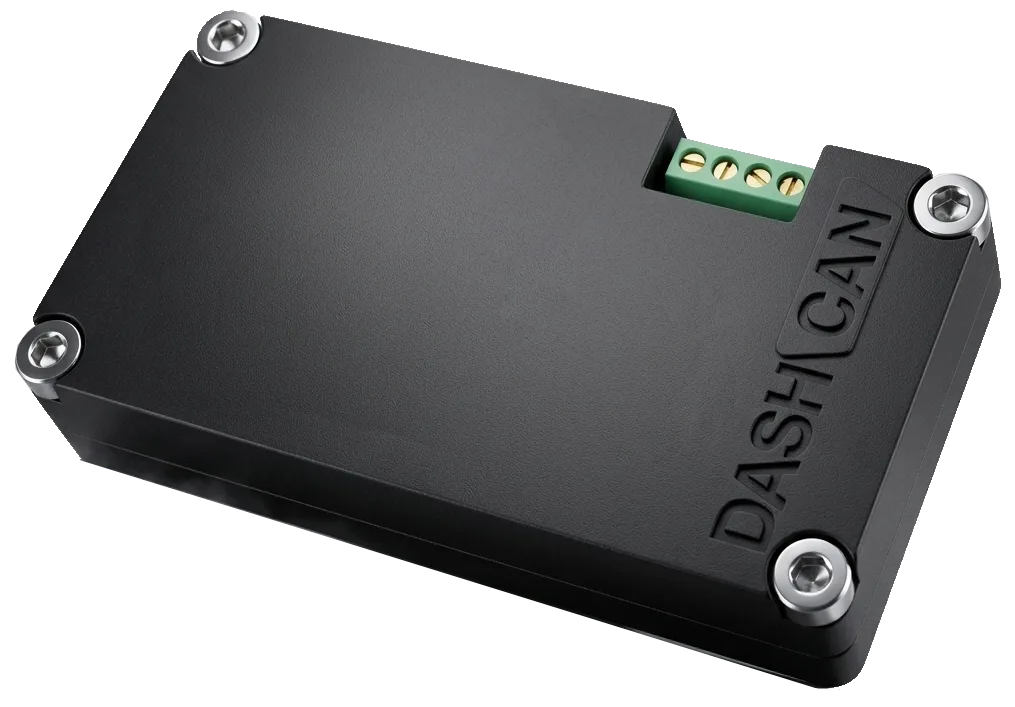 No OBD port, or a race loomDashCAN Wire-In4-pin screw terminalPermanent installs and custom looms, wired straight into the CAN bus.
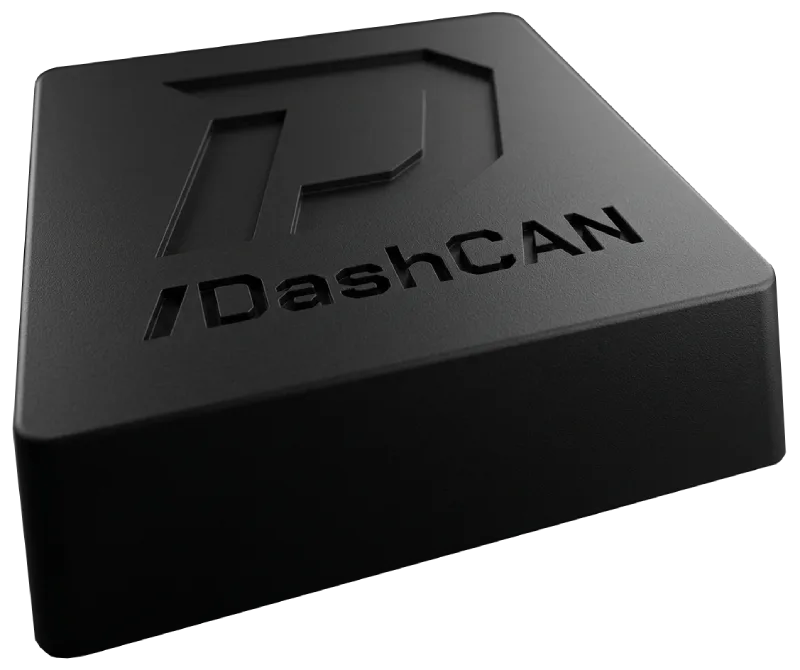 You also want lap times and G-forcesDashCAN ApexGPS + IMU + CANTrackdays: lap times, G-forces and CAN data in one time-aligned log, analyzed on DashCAN Cloud.
Plug in before the next trackday.
Closed-course use only. DashCAN products are intended solely for closed-course competition and motorsport use and are not type-approved or certified for use on public roads. Use them lawfully and safely, and do not operate the app while driving. See our Terms & Conditions for full details.